Memory Card Puzzle Challenge
Reviews
Memory Card Puzzle Challenge delivers exactly what its name suggests: a grid of face-down cards, two flips per turn, and a clear goal of matching every pair. The strength of this format is its accessibility. No tutorial is needed because the rule is obvious after one turn. Tracking moves and elapsed time adds a light competitive layer for players who want to beat their previous scores. The gradual difficulty increase keeps the game from feeling static, though the input does not detail how many levels or grid sizes exist. This suits casual players, children, and anyone seeking a low-pressure concentration exercise.
Description
How the Matching Works
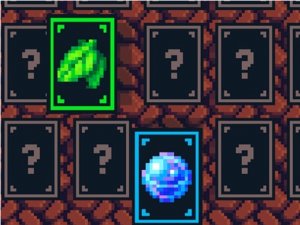
Every round begins with a grid of face-down cards. You flip two cards per turn to reveal their images. When the images match, those cards stay face-up and are removed from play. When they do not match, the cards flip back after a brief pause. The entire board clears only after every pair has been found. Because unmatched cards return to their hidden state, progress depends on recalling which images appeared where during earlier turns. The game tracks your moves and elapsed time, giving you a concrete way to measure whether your memory and approach are improving.
Difficulty and Pacing
The challenge scales gradually. Early rounds use smaller grids with fewer pairs, making it easy to build confidence. As you continue, the grid expands, increasing the number of card positions to remember and the time needed to clear the board. Some versions may also reduce the time allowed per move, adding pressure without turning the game into a reflex test. The pace remains self-directed: you can take as long as you need before flipping each card, so the game never forces rushed decisions. That design makes it suitable for a quick session or a longer, focused attempt.
Visual Style and Interface
Colorful card designs distinguish each image clearly, which matters because your success relies on recognizing and recalling specific pictures. The interface stays simple and intuitive, with no complex menus or hidden controls standing between you and the next flip. That straightforward presentation keeps the focus on observation and memory rather than on learning a complicated system. Children and adults can both pick it up immediately, and the lack of time pressure in the core mode means the game works as a relaxed activity or a light mental workout.
Approaches That Help
Flipping cards in a consistent pattern, such as left to right or top to bottom, reduces the chance of overlooking a position. Naming or describing each image silently as you reveal it can strengthen the link between the picture and its location. When a mismatch occurs, treat the pause before the cards flip back as a chance to lock in both positions. Avoiding rushed moves lowers error rates, and playing in a quiet setting helps you concentrate. Over repeated sessions, most players develop a personal system for organizing what they have seen.
Compatibility
Faq
Does Memory Card Puzzle Challenge have a time limit?
Can I play Memory Card Puzzle Challenge on a phone or tablet?
Is Memory Card Puzzle Challenge suitable for young children?
How does the game increase difficulty as I progress?
What is the best way to remember card positions?
Does Memory Card Puzzle Challenge offer multiple difficulty levels?
Games You Might Enjoy

Snake Soccer: Funny Animal Sports Game

Cat Town Builder Idle

Tiny Kingdom: Idle Building Simulator

Bounce Push Clicker

Retro Gold Coin Collector Idle

Choco Benno 2: Candy Platformer

Robo-Guard Robot Rescue Arcade

Ocean Cleanup Sorting Puzzle
Shortcut Run Racing Arcade

Freddy Sliding Puzzle

Fantasy Creature Designer

Editorial Notes